Review by Clea-marie Thorne
This is the Manson record I have been wanting to hear. There is something wonderfully familiar crawling through ‘One Assassination Under God – Chapter 2’. It is there in the grime, the gothic melodrama, the industrial guts, the hooks that really should not be as catchy as they are and that unmistakable sneer coming through the speakers.
Marilyn Manson is sounding like Marilyn Manson again. That does not mean dragging an old album out of the crypt and having another crack at it. The fingerprints of those earlier records are all over Chapter 2, though. Little flashes appearing in the electronics, the guitars, the theatrical delivery and that old knack for making something dark and ugly somehow ridiculously hummable.
Tyler Bates is once again sitting beside Manson in the writing and production chair, and across these nine tracks his cinematic touch is everywhere. Songs are being given room to breathe. Bass lines are moving underneath the guitars instead of disappearing into them. Electronics are creeping around the edges. Some tracks are strutting, some are grinding and others are just sitting there being bloody uncomfortable. It works.
‘Unalive’ is getting things moving with a pulsing industrial undercurrent and initially Manson is “coming for you” settling into that low, menacing delivery. The vocal treatments are immediately noticeable across this record and I can imagine they will split listeners, but I am finding them part of the character of it. There is menace in the track without everything needing to be turned up to eleven.
‘Don’t Answer The Door’ is sinking further into the gothic end of the album. Dark, moody and theatrical, it has Bates’ film scoring fingerprints all over it. This is one of those tracks benefiting from space. Nothing feels in a hurry. The discomfort gets to hang around for a while.
Then ‘Front Toward Enemy’ puts the boot in. Already familiar from its earlier appearance alongside ‘Raise The Red Flag’, it fits naturally into the album and remains one of the nastier industrial cuts here. The guitars grinding, rhythm hammering underneath them and Manson sounding suitably pissed off. There is plenty of venom in this one and it feels built to be turned up stupidly loud.
‘All The Vilest Things’ is ridiculously catchy and this is where some of the goth and glam starts slinking into the room and I am completely fine with it. The hook digs in quickly, Manson dialling up the theatre and letting some swagger loose. It has that slightly filthy, playful quality that has always sat somewhere within his music and it is one of those songs I am finding myself wanting to go back to.
‘None of the Suns’ changes the feel through the middle of the record. Bass and electronics becoming more noticeable, the rhythm carrying a darker post-punk kind of sway and Manson using more of his cleaner register. There is a lovely gloom sitting over it. It is melodic, strange and atmospheric and it gives the album another texture just when it needs one.
‘Lucifer’s Teardrop’ keeps pulling at that melodic thread. There is plenty happening underneath the vocal, little electronic details and guitars filling the space while Manson gives the song one of his more theatrical performances. It is dark as hell and catchy with it, another of those tracks revealing itself a little more every time I play the album.
‘The Arsonist’ is where some real ugliness starts showing its teeth again. There’s a nasty quality in Manson’s vocal here that I love. The song feels grubby and uncomfortable, carrying that sense of vengeance running through much of the album without needing to spell everything out. Manson has always been effective when leaving enough room for listeners to decide exactly who or what he has in his sights, and ‘The Arsonist’ gives us plenty to chew on.
Then there is ‘Exit Wound’. This one is an easy standout for me. Bass driving the track, guitars and electronics wrapping around it and that chorus getting lodged in the head almost immediately. It is heavy, dirty and seriously catchy. There is a confidence running through the song that sums up a lot of what I am enjoying about Chapter 2. It sounds comfortable in its own filth.
That leaves ‘Enantiomorph’ to shut the door. The title itself is a cracker. An enantiomorph being a mirror-image form gives plenty to play with inside a project split across two chapters, but I am more interested in what the song actually feels like when it arrives after a recorded message addressed directly to the listener. The message is bitter, defiant and strangely intimate, ending with the promise that God will be their only light in his darkness. It is eerie, slower and far more exposed. Piano and atmosphere are being allowed to carry some of the weight and Manson is sounding almost fragile in places. It is a surprisingly emotional place to leave the album.
Across all nine tracks there is vengeance here, absolutely, although I am hearing more than somebody simply lashing out at critics or settling scores. There is survival in it. Resentment. Ego. Damage. Identity. Anger. A fair amount of looking back at what has happened and deciding what gets carried forward.
And underneath all of that is a bloody good collection of songs. That is the thing landing hardest for me. I love where this album has taken Manson musically. The industrial machinery is back where I want it. The gothic theatricality is creeping around again. There are glammy little flourishes, filthy bass lines, electronics, genuine heaviness and choruses that stick around long after the album stops.
Bates seems to understand exactly how much space all of those ingredients need. Nothing feels desperate to prove Manson can still sound dangerous. The danger is simply sitting there.
I am not looking for another copy of an album I already own. What I want is that DNA. The menace. The hooks. The grime. The weirdness. That slightly uncomfortable feeling that the bloke on the other side of the speakers might actually be enjoying getting under your skin. Chapter 2 gives me plenty of it.
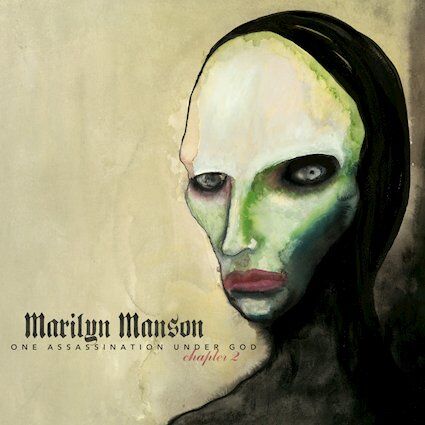
Manson is older. The voice carries more damage. The world around him has changed dramatically and so has everything attached to his name.
The music, though? There is a bastard in there I recognise.
For those who must have a comparison, and I wasn’t one of you: Chapter 1 felt like resurrection. Chapter 2 sounds like he has worked out what he wants to do with the body.