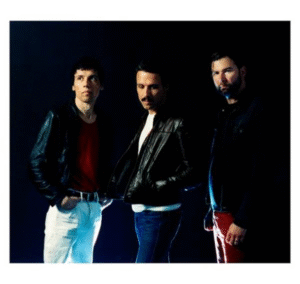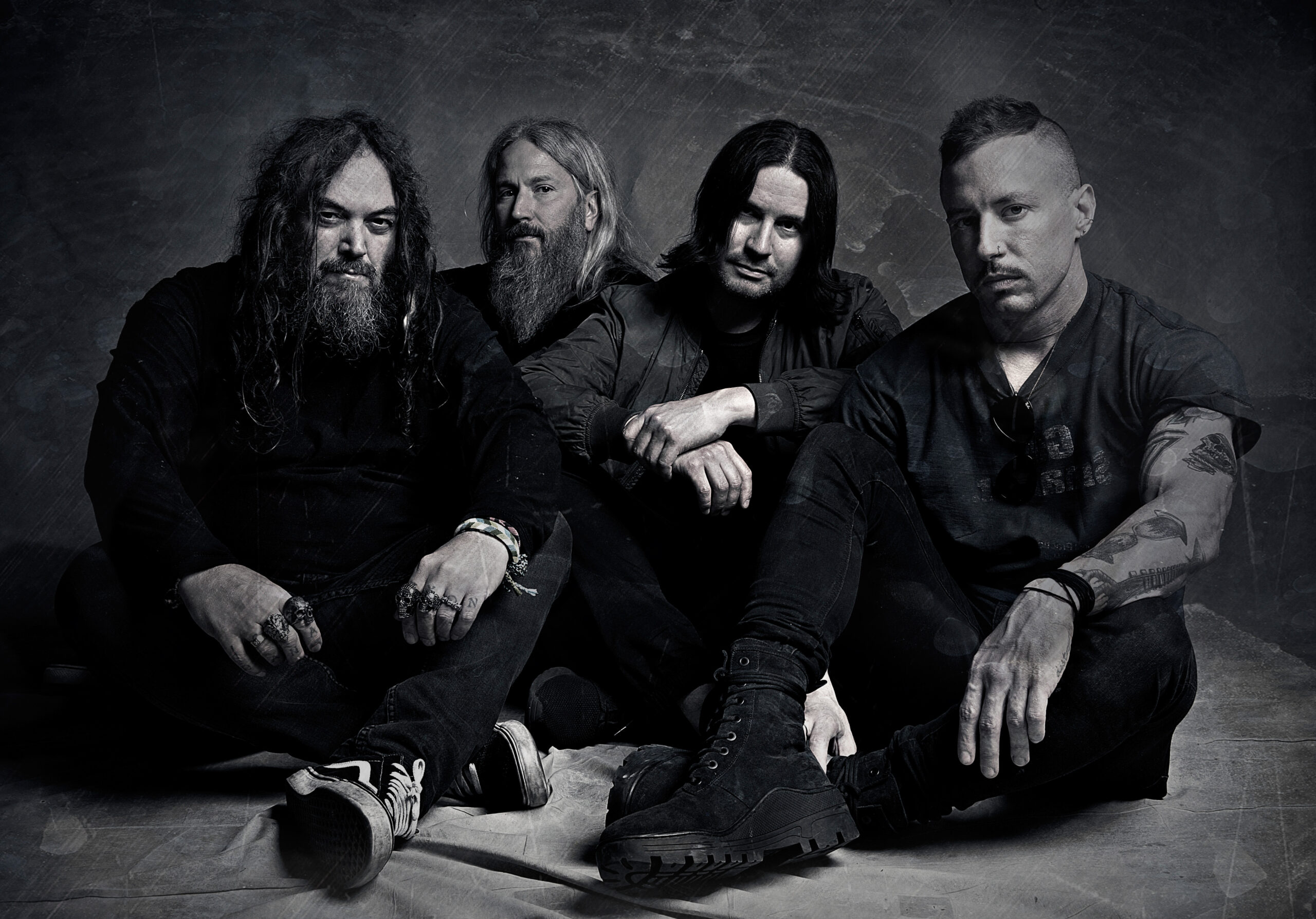
Scott sat down with Greg Puciato from The Dillinger Escape Plan, The Black Queen, and Killer Be Killed to talk about KBK’s new album Reluctant Hero, which drops on the 20th of November from Nuclear Blast Records (preorder now!). To get an early taste, check out the official videos for Dream Gone Bad and Deconstructing Self Destruction.
In our chat, Greg talks about the new record, the feeling he gets from being part of Killer Be Killed that he can’t get anywhere else, plus some insights into his songwriting, lyrical and performance processes.
Interview transcript
This transcript has been edited for clarity
Live Wire: Hey everyone, Scott from the Live Wire in Australia here. I am really excited today to be having a quick chat with Greg Puciato. Greg has just released his debut solo album Child Soldier: Creator of God, and he’s part of Killer Be Killed whose new album Reluctant Hero drops on the 20th of November from Nuclear Blast Records. You may also know Greg from his lead vocal duties in the Dillinger Escape Plan and the Black Queen. Greg, Thanks so much for your time with us here today.
Greg Puciato: Thank you brother. Good to talk to you.
Producing music during COVID
LW: Between Child Soldier and Reluctant Hero you’ve obviously had a lot going on over the past year or so, which means that a lot of the work that you would have had been doing would have been happening against the backdrop of COVID. Did any of the sort of angst, fear, boredom from lockdown or just the COVID situation in general make it into any of these new albums as far as you’re aware, consciously or subconsciously?
GP: No, these were done before COVID happened. I finished both of these pretty much right before, like literally right before, like the week before COVID hit, these records were done tracking. And then they were mixed as COVID was happening.
So they were mixed during like April and May, or like mid-March to like the end of May they sort of were mixed simultaneously, but all the writing and the tracking happened before COVID hit. So, you know the last 6 or 7 months from me have just been like set up and getting the albums ready. There’s shit-tons of work to do for each of them behind the scenes because I’m involved in every single aspect.
Nothing moves without me micromanaging it because that’s just how I am, so every single thing for both releases, especially mine, because Federal Prisoner’s, you know, we, every single fucking facet of it, it’s something I have something to do with too, so everything, it’s just been a ton of work.
I don’t think that I would have…I don’t feel like the last 6 or 7 months have been that easy for people to be creative in, and like I think people think that just because you have time to not tour, or time to not do other things that you’re automatically going to be creative. But I think that the situation for people has been so dire that I haven’t felt super creative. Anyway, it might be me because I just finished 2 records. So maybe I have nothing to say, but no, none of the COVID stuff really affected the records at all.
LW: And what about in the actual… so you said all the behind-the-scenes work after the fact did COVID make that any more difficult or did you have to pivot to address any of that sort of stuff?
GP: That makes the… there’s like a bunch of little shipping hiccups that are, you know, that are a pain in the ass because of COVID now. So like record pressings are a little backed up and they take a little bit longer than they would have, and the shipping, there’s like all kinds of different regulations now that, particularly for bulk shipping that normal people don’t know about, people who don’t ship pallets full of shit across the ocean. There’s a lot more regulation and checking and testing and holding things for a while in each place, quarantining once they come to a port and all the stuff that you didn’t used to have to do. So anything that involves bulk shipping is like, you know for record plants and things like that, is taking an eternity.
So that’s a pain in the ass, but that’s more of a frustration. It’s just knowing that things are taking a long time and that certain deadlines might not be met, and that your record might not get to the fucking store in time.
You know, you’re going to have to tell people that ‘Hey guys, everything’s taking longer than we thought’ like, you know, you’re not, maybe our record won’t be in your mailbox on the release day and there’s nothing we can do about that kind of stuff.
So that’s frustrating because naturally as someone who wants everything to be perfect. Like I start to fucking have like a panic attack when something’s going wrong. It isn’t under my control. So I’ve had to kind of just like, get over that this year, because there’s no… you can’t predict how long any of this stuff is going to take, you know, you get a bunch of records made and they’re supposed to show up in, 6 to 8 weeks and then you find out at the 5-week mark that it’s going to take another 4 to 5 weeks and you’ve just got to let go of it and hope that people are understanding of it and no one’s going to, you know, no one’s going to not get it, but it is what it is man. Sometimes it rains, sometimes it snows, sometimes it’s sunny, you fucking just wake up and deal with it, you know.
Songwriting and constant artistic growth
LW: There’s been 6 years that have passed between now and Killer Be Killed’s debut album. And in the meantime, you’ve had a lot of stuff going on in your life, including the final Dillinger album, final Dillinger tour, a large chunk of the Black Queen’s existence and your solo album. Is there anything that you can point to on Reluctant Hero, whether it’s a song or a riff or a lyric or whatever, that wouldn’t have been possible had you not been through all those steps over the last few years?
GP: Yeah, I mean, I think all of that. I think every single thing that you do is an accumulation of the things that you did. You unlock different tools with every release that you do and with every experience that you have. If you’re living artistically, you never turn it off, but I don’t think of myself as like, I’m artistic during this time period and I’m not during another time period. It’s like I’m constantly, like I wake up and I just, I’m an antenna—I can feel like I’m an antenna that is absorbing things and I output when I output, you know, sometimes I come up with a riff while I’m in the shower. Sometimes I come up with a vocal melody while I’m waiting for an Uber.
You don’t really know why these things are coming to you when they’re coming to you and I feel like everything that you do, is if you’re living artistically and you’re thinking of yourself as it’s not just an occupation, it’s a lifestyle—you’re receptive at all times and every experience you have…if you’re up for some time of intense experience with someone or if you go through something intense and that that ends up reflecting back out of you artistically. And musically, if you make a record—every single time you make a record you grow.
So when you know, if you’re doing it the right way, it’s like every time you make a record you challenge yourself to make something that wouldn’t have been possible the last time you made a record, you know? Whether you view your singing at a level of ability than you couldn’t before, or you’re playing guitar at a level of ability you couldn’t before, or you have some kind of insight into the songwriting process that you didn’t have before, you unlock something different in yourself that then becomes a tool that you can expand upon on the next release. So I feel like everything is always an accumulation.
I mean a case in point for Reluctant Hero… There’s a song on Reluctant Hero called “From a Crowded Wound”—that is my song from front to back. Wrote that song front to back, like every single part of it. Every vocal, every guitar part, everything, and that song was… the original demo of that song was done in 2010 and the music is exactly the same. So the music of the demo from 2010 is structured exactly the same as the fucking version that’s on the record now, and I couldn’t finish it back then because I just didn’t have the tools to get it over the finish line. Like I didn’t know…the parts weren’t coming to me. Like the parts vocally weren’t coming to me, the drum patterns and things that I needed to be able to conceptualize in my head weren’t coming to me, and for whatever reason when I went back and reapproached it now, 10 years later, like it came right to me. So obviously I accumulated something during that time that gave me ingredients that I didn’t have 10 years ago.
So, you know, you are always unlocking things and you’re always kind of building upon your own abilities. If you’re treating this, you know, as an exploration and as an adventure and you’re excited to challenge yourself and grow and not just tell yourself that you’re the guy that you were yesterday, you’re always unlocking things.
Solo versus collaborative songwriting
LW: To a degree, maybe not perfectly, you were probably having to juggle between your work on Child Soldier and Reluctant Hero a little bit. In doing that, obviously in Child Soldier you were doing all the writing yourself through having no one to rely on but yourself. Whereas in Reluctant Hero you would have been bouncing ideas off of Max and Troy when you bring something in and it becomes something totally different. I imagine those are very different experiences to songwrite in. Do you have a preference of one way or the other, do they sort of scratch different itches that you’ve got in your brain?
GP: Yeah they’re completely different. They are completely different, you know, creative itches that you scratch, and artistic ones. So it’s like you… when you’re in a part of an ensemble cast it’s challenging in a different way because just to be to be able to collaborate naturally and without inhibition, and make yourself vulnerable in a collaborative way, and allow yourself to go down roads that weren’t your idea and kind of like, be excited to chase different connections that might not have been there without these other people.
That’s a different skill set than, you know, being super controlling and micromanaging and heavy-handed about every single facet of your records. So they’re completely different but they’re both validating. When I did the solo record, which was done after the Killer Be Killed record—the Killer Be Killed record, musically, was finished in March/April of 2019. And then I immediately started writing the solo record after that. So they weren’t overlapping musically—we finished the Killer Be Killed record musically in 2019, March/April, and then we had that record fully done, instrumentally, until February of this year where we tracked vocals, which is really unnatural. But so during that time I wrote and recorded the Child Soldier album and then went back to the Killer Be Killed album and did the vocals.
So they’re completely different experiences… and now that I’ve done both of them, I feel that I see where both of them fit. Like, I can’t imagine not being in a band. I can’t imagine not having real collaborations with people but I also can’t imagine not having my own thing because they’re completely different. Like as soon as I finished the solo record, I understood the value of a band more, and I understood the place of a band for me more, and what I get out of it, and what excites me about it, and then now, so now I see I can’t believe that I didn’t always have to both because now it’s such a full picture, and I feel so actualized. I can’t even imagine being just a situation where you’re just like a guy in one band or something. That sounds crazy to me.
Tapping into your inner 13-year-old metalhead
LW: What is it about Killed Be Killed that brings you the enjoyment you get from playing with those guys?
GP: I think it’s the thing that’s the closest to a band that I would have had when I was 13 years old. It was really organically formed, it’s the same kind of music that I would have probably played when I was 13, like it’s like a kind of a cross between all sorts of metal. It’s all sorts of heavy music because I was really into metal and I was really into grunge and I was really into alternative and I can kind of mash all that together in this band.
And it formed really naturally. It wasn’t like we just head hunted people and we were like ‘hey, we’re gonna get this guy and that guy and this guy and put them in a room’. Like it was really natural, it’s like Max and I were at a show in LA and we were like, ‘hey, we should write some shit together’ and I went over to his house and we played riffs, just like we would if I was a fucking kid and I went over to my friends’ house. And then Troy found his way in and Ben found his way in and we just became like a really organic band.
And to the degree… it feels so much like what I would have done when I was 13 years old that I put a riff in in a song on this on the Killer Be Killed record from my 13 year old band just to see if it would sound in place, and it does—like it doesn’t sound out of place at all, and no one would ever be able to tell that one of those riffs I wrote when I was 13. So there’s a, you know, it feels very pure. And very like tied in and that way to something that we just formed really naturally when you’re young.
Like obviously Dillinger Escape Plan was assembled and then over time, there’s 18,000 different members and only some people are in the band and some people are hired guns and some people, you know, people come and go and it’s like you’re, you know, it’s a completely segregated process for the most part musically and vocally. It’s like one side is Ben’s, one side is mine and we mash them together and that’s the band.
And then you know, Black Queen is like a completely different style of music. So it’s not anything to do with what I would have written when I was 13. It’s like a style of music that I didn’t, you know…I didn’t have keyboards and drum machines and shit when I was 10 years old. I had guitars so… in that way Killer Be Killed is more, it’s closely tied to like my 13 year old self.
And I think that’s kind of the intersection that we all find within the band, even though we’re different ages. I feel like Killer Be Killed is like all of, you know, we’re all physical different ages but inside, our inner 13 year olds all have a band together and that’s that band. And like we kind of just, when we show up to hang out with one another, we just bring our 13 year old selves to the table with, you know, with the skillsets that we have now, but with kind of like the enthusiasm and the love for you know, heavy music that we had then.
And for me also, it’s like I’ve never been in a metal band. So it’s, I’ve never been in a heavy…it’s like Dillinger Escape Plan had metal parts, and we had metal leanings but we weren’t a metal band. I would never describe Dillinger Escape Plan as a metal band. But like fuckin’…Killer Be Killed definitely falls in that umbrella, so that’s kinda cool for me, to be in something that’s just like ‘Yeah, this is a heavy band, and we only use heavy elements, and there’s not gonna be a synthy pop song, and there’s not gonna be some glitchy electronic thing, this is a fuckin’ guitar, drum, bass, heavy band and we’re gonna stay within those parameters and there’s something really freeing about that too.
Greg’s approach to writing lyrics
LW: Switching gears a bit, this is probably a bit of a left field question, I want to talk a little bit about lyrics. With Dillinger, on the album One of Us is the Killer, some of the lyrics were about the creative relationship between you and Ben.
Just wondering what it’s like if you’re writing lyrics about someone who’s in the room there with you. Is that something that caused any tension either during the recording or when you were on stage performing these songs live every night?
GP: I mean, it’s not that cut and dry, like a lot of times when I say the word ‘you’ I’m talking about me, so that gets often misconstrued because a lot of times people think I’m saying the word ‘you’, I’m talking about a third person. But a lot of times I’m saying the word ‘you’ because I don’t have… because it’s a little bit too intense to say the word ‘I’. So on a lot of the older Dillinger records I think the word ‘you’, a lot of times, is talking to me.
But when you’re you know, a lot of our relationship at that time was so fused that it was it was difficult to tell you know, who was who in that relationship – it was very symbiotic. So, you know a lot of times when I’m writing, if I’m very frustrated about something. I don’t really know…I’m not isolating who it’s about when I’m writing. I just write abstractly and then I read it back and I’m like, ‘Oh, this is about this’. Or this is you know, this is what I’m talking about.
And a lot of times those songs have a double meaning because you tend to gravitate towards people that mirror you. So a lot of times the thing that you think that you’re mad about in someone else you’re actually mad about in yourself too. So some of the songs when I’m saying ‘you’ I’m talking to myself and another person so it’s not that cut and dry.
LW: Okay that leads me to my next question. So on your solo album, there’s a song called “Evacuation” and there’s a line in there that gives a pretty strong hint that it could be about Dillinger. But if you read the lyrics it easily could be about any relationship.
Is that something you do on purpose where ‘I’ve got set in my mind that this is kind of about this thing, but I want to craft it so that people could interpret it in different ways?’
GP: No, I don’t care what people think. I really just write what I write and like I don’t think about it, man. Like really, it’s that simple. When I was writing that song… When I write lyrics I just write what comes out of me and I look at them and I go, ‘Huh… That’s about that’. And then that’s it. Like I don’t think about the topic before I write and I don’t… I just try to write really automatically, which you know, I try to like write very stream of consciousness and let what comes out of me, come out of me and then I look at it and like I said I go ‘Oh, this is about that’.
But obviously that song references the Dillinger Escape Plan to some degree, but you know, people in their life have a tendency to repeat relationships in their life. So if you’re prone to developing a certain type of relationship in your life, you’re going to find that relationship in multiple instances. So there’s a lot of themes in songs where I could be talking about the Dillinger Escape Plan, but I could also be talking about a personal relationship in my life. Or I could be talking about previous relationship in my life, or a tendency within myself because you know a lot of times you tend to find those same exact things over and over and over in multiple situations in multiple people.
So, you know again, it’s not so topically cut and dry as it is thematic and a lot of times songs are dealing with multiple subjects and objects within the same song, but that all tie into the same theme, that all tie into the same tendency.
But “Evacuation”, I mean that line, that’s a line from Prancer is obviously a reference to the Dillinger Escape Plan. But it’s…let me think about that song’s lyrics…there’s multiple objects within that song, there’s multiple subject matters within that song. And then there’s a line in the song, it’s like ‘I never lost this feeling with all I’ve gone through’ and obviously, that feeling is about the love for doing what I’m doing. That’s what I’m talking about.
I’m saying that no matter all the shit that I’ve been going through in life throughout my whole life, there’s nothing that’s ever meant more to me than this, you know, than when I’m within music and creation and art, you know, I think that the Dillinger Escape Plan ‘How could it all be?’ thing’s just like a reference to that being a part of that.
Performing while unconscious
LW: When you’re on stage, you have all these themes and stuff floating around your head and some is based on actual events some of it’s based on just ideas. When you’re on stage and you’re singing, are you reliving the lyrics and the feelings that are behind the lyrics in your head or is it sort of more a technical, muscle memory performance type thing that you find yourself doing?
GP: I mean, first of all, if your voice isn’t where you need it to be, that’s gonna fuck you up. So you need to put yourself in a position where your voice is where you need to be so you don’t have to think about your voice. If you feel like you’re 90%, all you’re gonna feel is that 10% that’s missing and you’re gonna have to adapt to that and figure out ways to try to hit notes that if your voice is fucked up, you can’t really hit ‘em. You gotta figure out how to deal with that. So for me, most of the day revolves around getting myself to the place vocally where I’m not gonna have that happen. So vocally you want to make sure that you’re in a place where you can not think about that.
And then the point for me, as far as a performer, is just to become unconscious. I just feel like I want to be as unconscious as possible. And if I can become purely unconscious, then I can find this real sweet spot between meaning the lyrics and meaning what you’re saying and feeling emotionally tied to what you’re talking about, but also feeling emotionally tied to the energy of the room.
Because you’re not just fucking in a vacuum, there’s people in front of you and there’s a vibe that each room takes. And sometimes the vibe is more electric than other vibes, and sometimes the vibe is more hostile and sometimes it’s more, you know, celebratory. So you kind of have to find this weird centre of the Venn diagram between you know, making sure your voice is where you need it to be, being able to quickly access your emotions in a way where you can tap right into ‘em and get to the source of where they were for that particular song and then also being able to feel tied to the room and that’s the sweet spot and that’s where that’s really what, for me, I’m aiming for every night.
And then you can create some sort of transcendent experience for yourself and hope that that translated to the audience.
Post-COVID touring
LW: After all this COVID craziness stuff finishes, even though there may be a bit of a gap between the release of the Killer Be Killed album and your solo album, are you planning on doing any US and/or international touring to support it?
GP: Yeah, absolutely. I mean, I was supposed to be on tour all of 2021 kind of bouncing back and forth between, you know, various things and obviously that’s all scrapped. But that doesn’t mean I’m not going to do those things so, everything’s going to happen. It’s going to be just getting pushed forward.
Highlights from Reluctant Hero
LW: When people do finally get a hold of this album, what is the song that you think is going to resonate most with them or what’s the one that you worked on, what was your favourite to put out?
GP: Well, I mean ‘From a Crowded Wound’ is the one that means the most to me because that’s you know, my baby. Like I could have put that song on my solo record and it would have been the same exact song. I just would have sang Max and Troy’s parts instead of them singing them. So I mean that song is a big, you know, an important song personally for me like in every way, musically, lyrically, everything.
But like, you know the whole record it’s like you can’t predict what’s going to resonate with people and what’s not. Yeah, you just make what feels good to you and you make what feels honest to you and I’m not a big fan of… like you drop the bomb and you just keep flying. To me, like I don’t look back and see what kind of damage it caused.
I don’t read fucking comments on the internet. I fucking don’t even look at comments on Instagram posts, anything. Like I just fucking I know it’s gonna get posted and it gets posted and I never fucking look at it, I never fucking check anything, I never read YouTube comments, I don’t fucking look at fucking anything. I have no desire, because who cares? Like you just do what you do. I don’t give a fuck. I do what I do and I’m gonna keep doing what I’m going to do. I’m not going to care what something, somebody wants for me. What resonated with someone, what didn’t resonate for them.
You just keep going forward and you’re psyched…that way you’re psyched whenever anyone shows up and psyched when someone tells you that they have heard all your stuff and you’re like ‘Really?’ and it kind of keeps you pure in a way. Like every single show I play, I think no one’s gonna be there. I’m always like ‘Are people gonna come tonight?’. And then the tour manager is always like ‘Yeah, dude. It’s fucking sold out’. I’m like, ‘Oh shit, that’s cool’. Like I never know.
You know, I keep myself detached from it enough that I just, you know, I just do what I do. And then you know, if I’m in a band the band does what it does and then I just don’t look back. I don’t look back to see what kind of damage the bomb caused. I just keep going and I make a new bomb and then I drop another one and I just keep fucking going.
To me, everyone’s like ‘You’re only as good as the last thing you did’ but to me, I’m only as good as the next thing I’m doing, so I don’t even think about it. I just think about as soon as I’ve done something and it’s out, it’s out. It’s not yours anymore. You’ve released it. It’s gonna do what it’s gonna do, it’s gonna find who it’s gonna find, and then you just fucking detach from it and move forward.
Thanks for giving a fuck
LW: So you’re promoting at the moment your new solo album Child Soldier: Creator of God and the upcoming Killer be Killed album. Anything else you wanted to give a quick shoutout to today before we sign off?
GP: Yeah—anyone who’s been listening for a long time. And I know it’s difficult to get into everything. It’s like, I try to push people away as hard as they come in. You know, one of my greatest joys about the new solo record is imagining all the Black Queen people that are gonna get that wall of noise in the second track that might not have ever heard the Dillinger Escape Plan before and I just die inside with laughter knowing that, you know, I really enjoy making it difficult for people.
So the people that are around that do care. I appreciate you, we’re all fucking weirdos, or else if you weren’t a weirdo you wouldn’t be into what I’m doing because it’s all so over the place and so weird.
So I appreciate everyone for giving a fuck, and for being around, no matter how long you’ve been around, and hopefully you can these dig 2 records. And yeah I’ll see you on tour at some point when this fucking hellscape comes to an end.
LW: Greg, thank you so much for your time here today.
GP: Thank you, man.
LW: I’m extremely excited to listen to what you’ve got coming out soon, and in the future.
GP: Yeah man, next year’s gonna be, there’s gonna be a lot of shit going down. I’m not slowing down any time soon, man, so there’s a lot of stuff coming down the pipeline.
Preorder Killer Be Killed’s new album Reluctant Hero from Nuclear Blast Records