2 April 2026 – Fortitude Music Hall, Brisbane – words by Alec Smart – pictures by Bec Harbour
Celtic folk-punk legends The Pogues performed at Fortitude Music Hall on 2 April 2026 on their Rum, Sodomy & The Lash 40th Anniversary Tour. The global tour celebrates four decades since the aforementioned album, their second, was released in 1985. The album was re-released in 2005, with six bonus tracks, four of which appeared on their 1986 EP Poguetry In Motion. Several of those songs also appeared in the Brisbane setlist.
The current touring line-up of The Pogues features founders Jem Finer (banjo, mandola) and Spider Stacey (tin whistle, vocals), who formed the band in London in 1982, and James Fearnley (piano accordion) who joined shortly afterwards. All three core members were with the band during their creative years – 1982 up to their 1997 break-up – when they released seven albums, followed by the 2001–2014 reunion, and now their latest reformation with additional musicians and guest vocalists, which was announced in 2024.
Sadly, other long-term members have passed away in recent years, including bassist Darryl Hunt in 2022, and the iconic vocalist and principal songwriter, Shane MacGowan, in November 2023. The Pogues were supported in Brisbane and on their Australian tour dates by Irish multi-instrumentalist John Francis Flynn, who also returned to the stage as a guest musician for The Pogues, playing flute, tin whistle and guitar, and lead vocalist on their songs ‘Navigator’ and the Eric Bogle classic, ‘And The Band Played Waltzing Matilda’.
John Francis Flynn, a founder member of Dublin-based Irish folk band Skipper’s Alley, is a multi-award winning artist who has garnered numerous accolades in the British and Irish music media.
His debut album, I Would Not Live Always, was awarded 2021 Folk Album of the Year by The Guardian newspaper (UK). He won Ireland’s RTÉ (Raidió Teilifís Éireann) Best Folk Singer and Best Emerging Artist award.
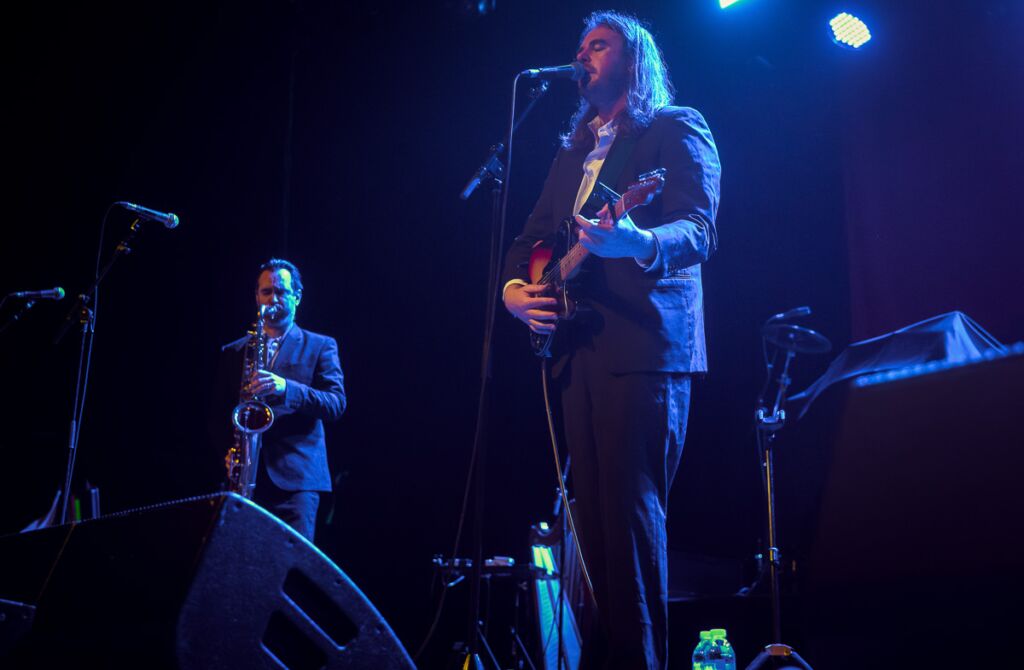
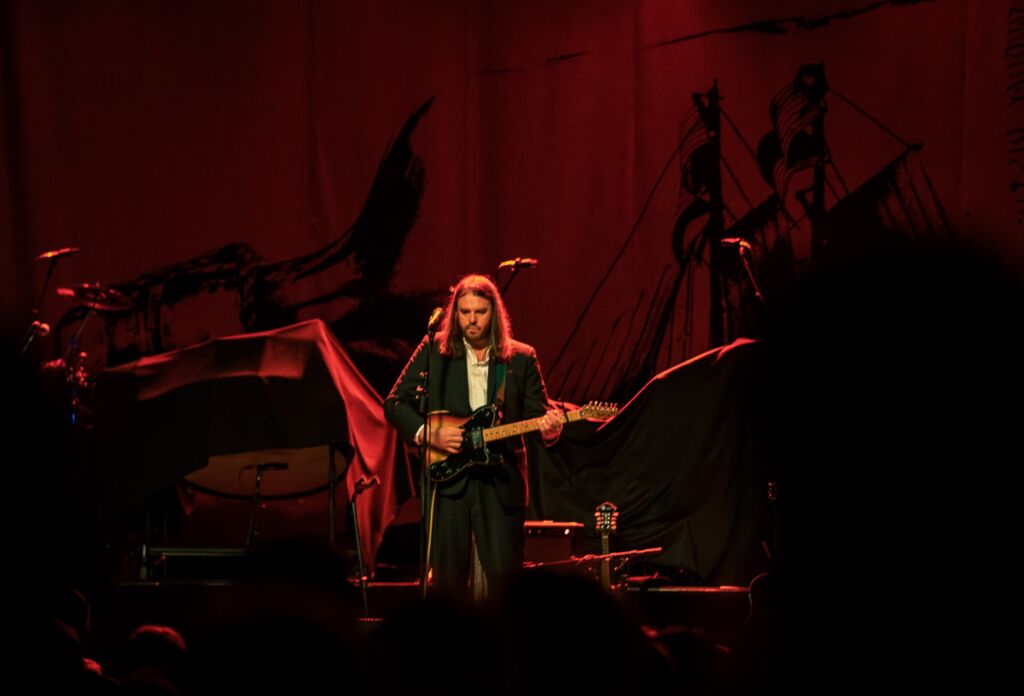
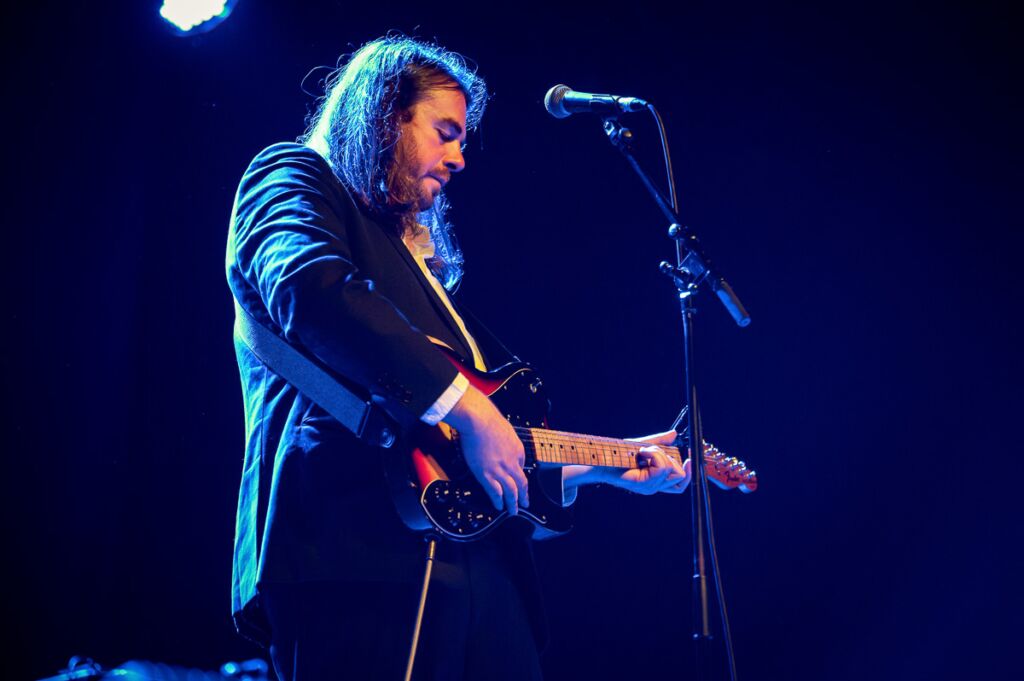
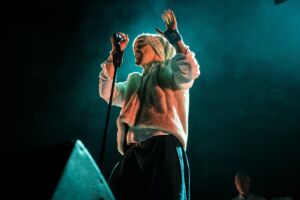
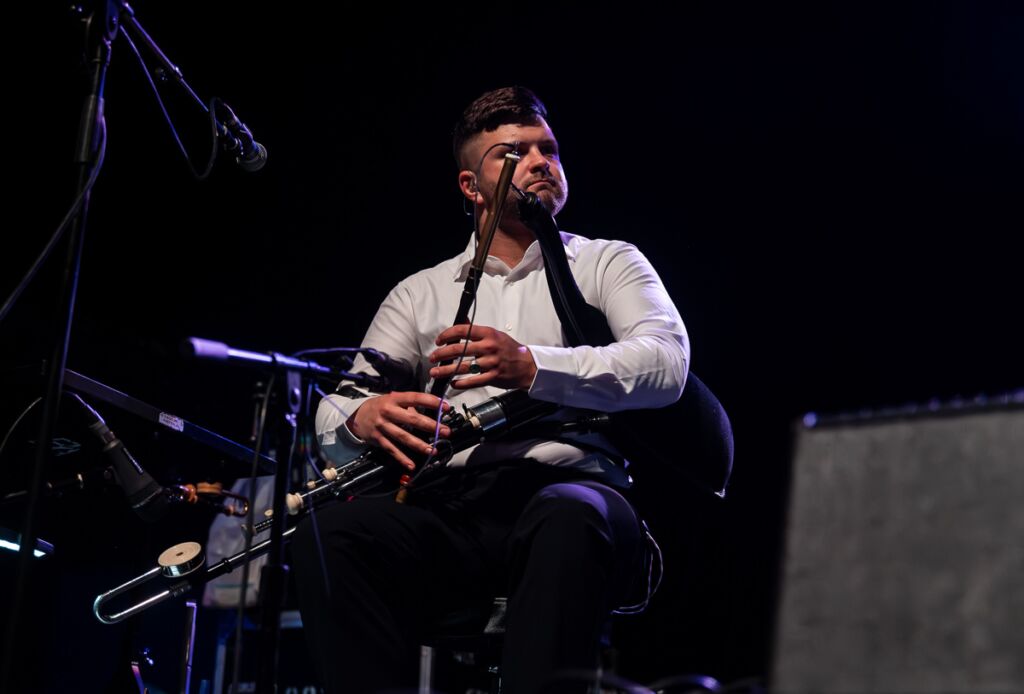
John Francis Flynn – FMH – photos by Bec Harbour
His second album, Look Over The Wall, See The Sky, consisting of eight traditional Irish folk songs (including ‘Kitty’ which was covered by The Pogues on their debut album), also received widespread acclaim, making several album of the year shortlists and winning RTÉ’s Best Folk Album in 2023.
At the Fortitude Music Hall, he played a mixture from his repertoire, which tend to be slow and sparse and for which he played different instruments. This included the aforementioned ‘Kitty’, which he introduced by asking if there was anyone in the crowd from Tipperary, Ireland (which caused me initially to speculate whether he was about to cover the World War One British soldiers’ marching song ‘It’s A Long Way To Tipperary’). Surprisingly, there were a few Tipperary locals in the crowd, and Flynn explained that the song traced back to farmhouses in County Tipperary, although the original title is ‘Kitty of Ballinamore’, a town 200km north of Tipperary.
There was a fair amount of loud talking among the mob at the rear of the hall during Flynn’s set, causing someone to yell “Shut up!”, which had little effect.
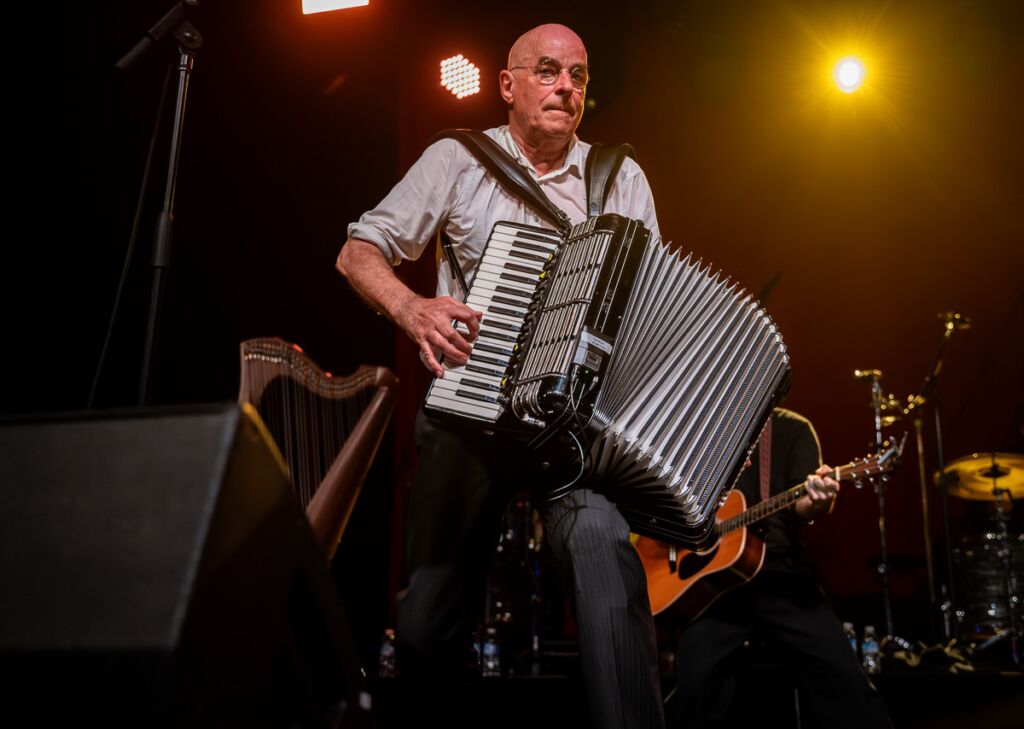
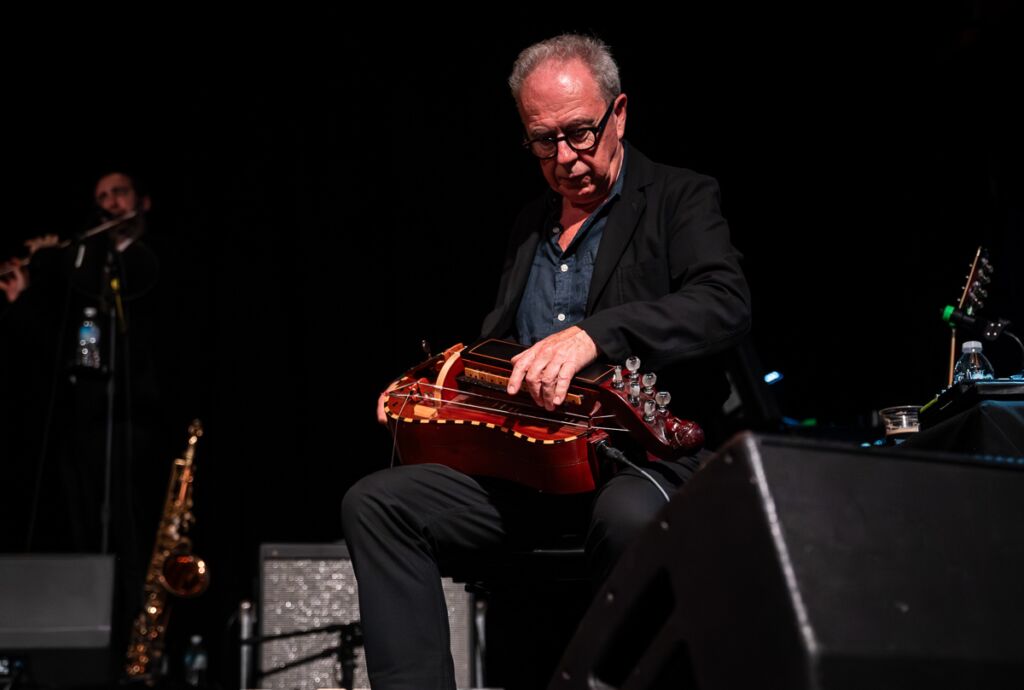
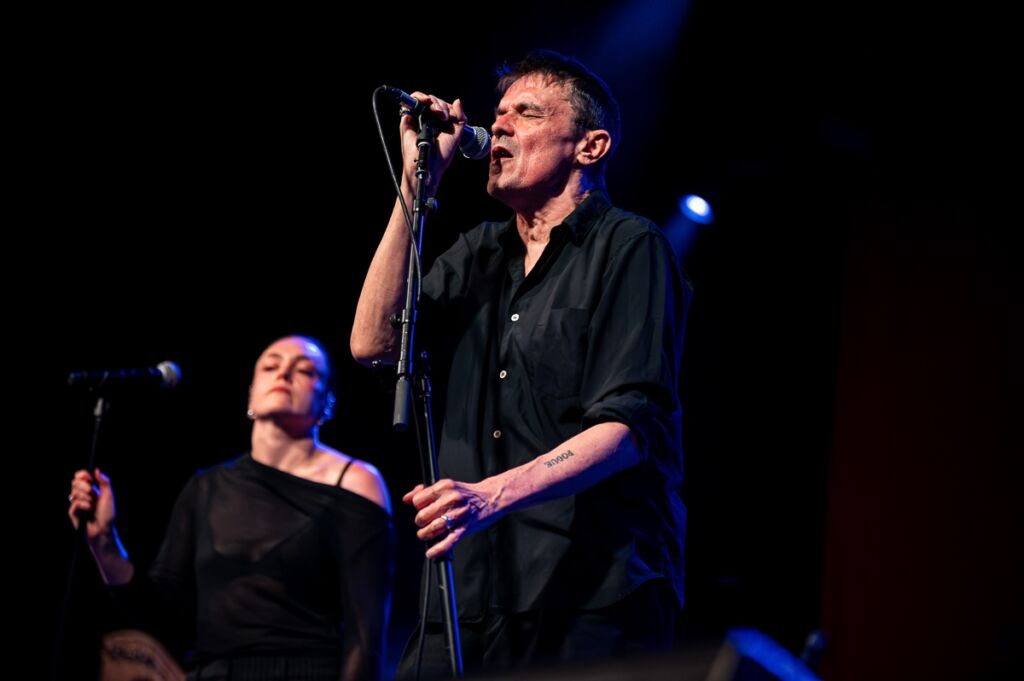
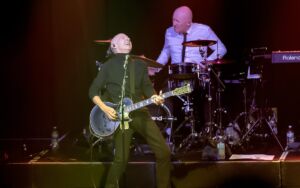
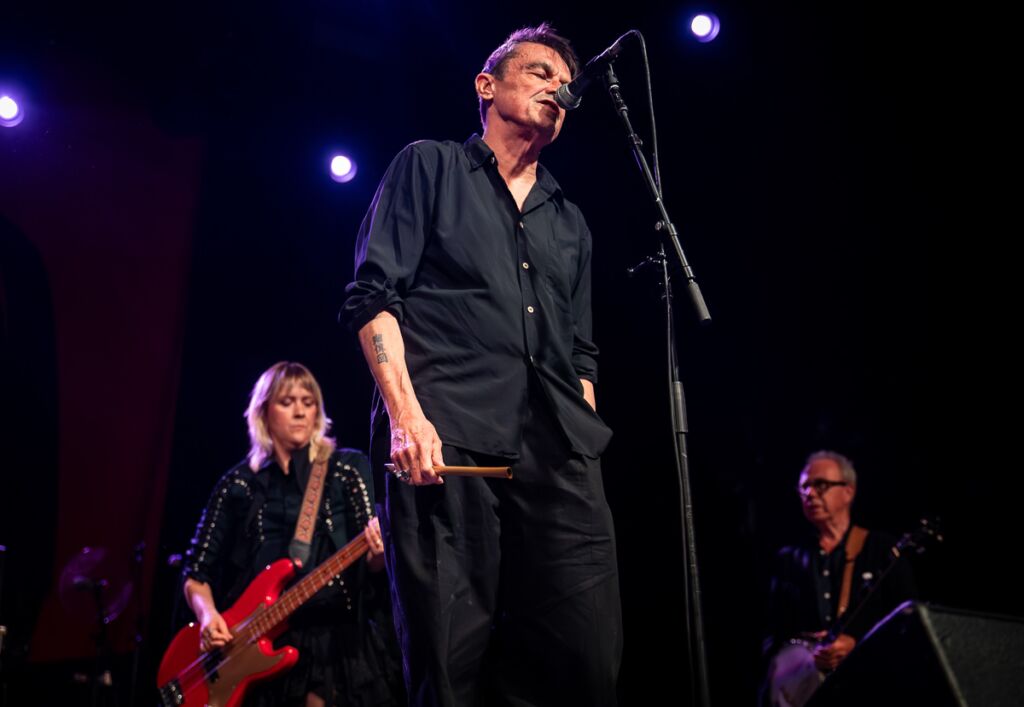
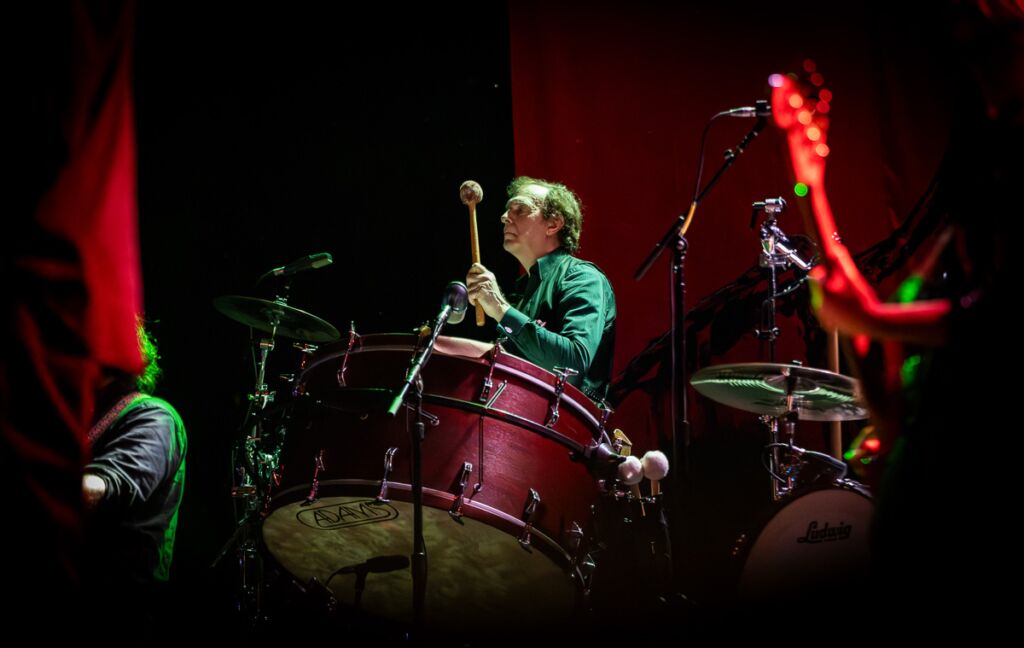
The Pogues – FMH – photos by Bec Harbour
However, when The Pogues ascended the stage, there was full concentration, and the band launched into the rowdy ‘The Sickbed of Cuchulainn’, a chaotic, alcohol-fuelled narrative about a dying Irish immigrant reflecting on a reckless, hedonistic life in London. It is one of many of The Pogues’ best songs that were composed by the late Shane MacGowan, a troubled genius and chronic alcoholic. The raunchy lyrics are possibly autobiographical – at least the references to bars, perhaps not the catching of syphilis or vomiting in a church! ‘Cuchulainn’ references the recovery bed of Cú Chulainn, a mythical Irish warrior who was whipped almost to death by two women, whom he previously tried to kill for their feathers when they were in bird form in a fantasy place called ‘Otherworld’.
Band leader Spider Stacey steered the night, alternating between vocal duties and tin whistle. Bass player Holly Mullineaux was the most animated onstage, energising her fellow musicians, including the three senior members from the original Pogues, two of whom, Finer and Fearnley, are now in their 70s.
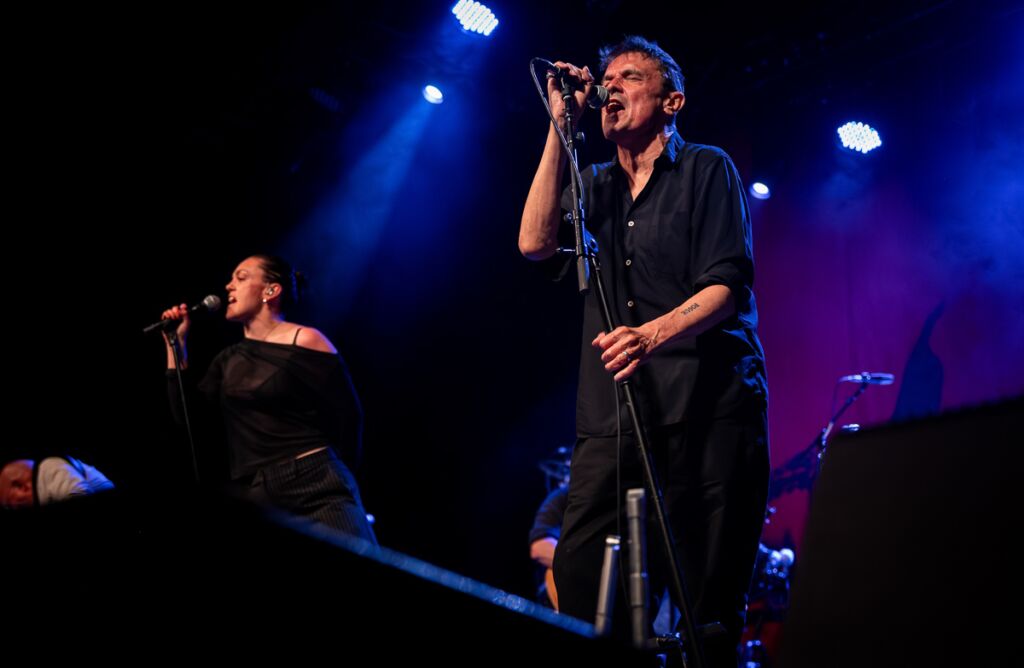
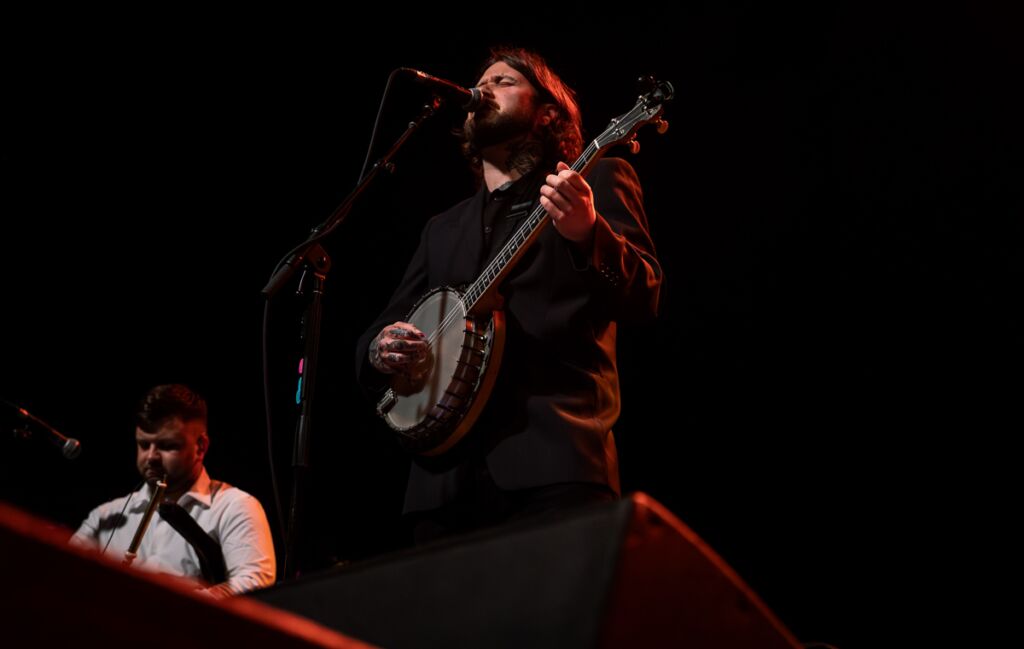
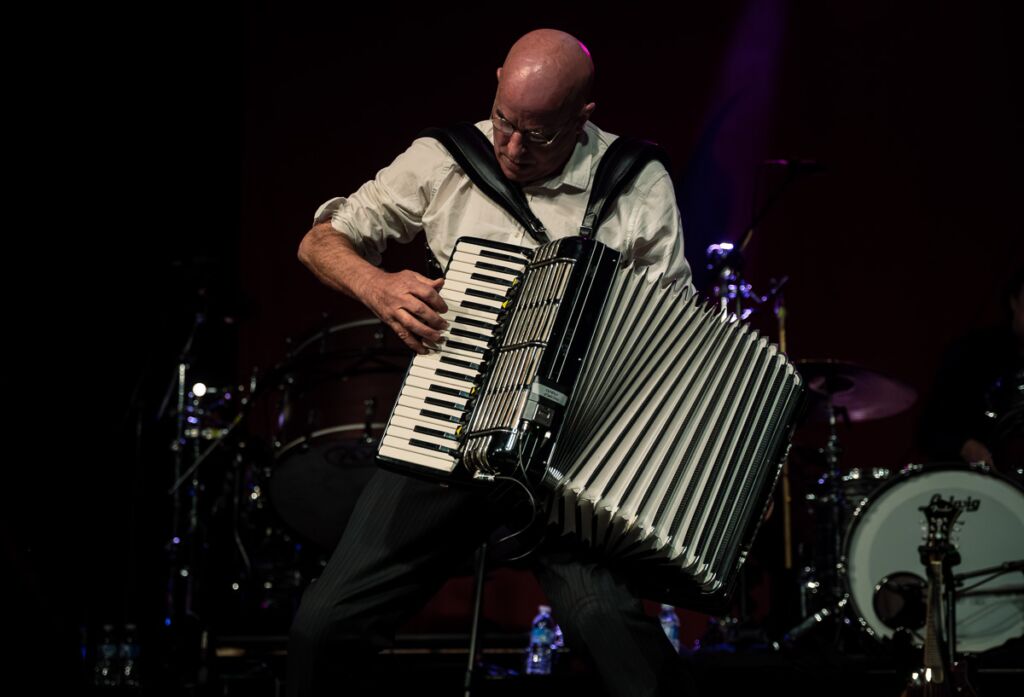
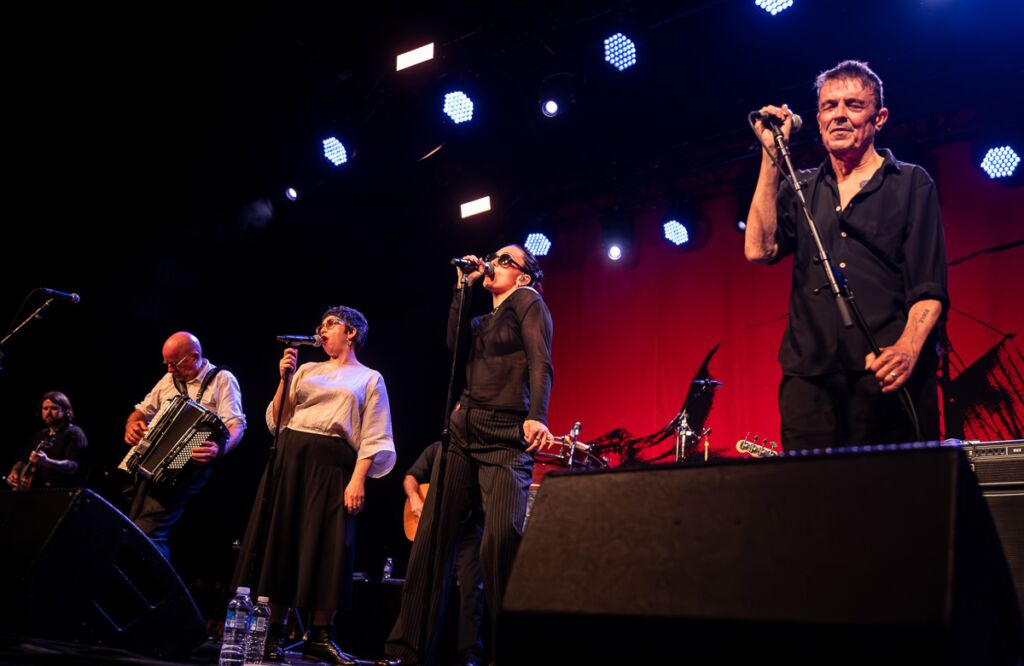
The Pogues – FMH – photos by Bec Harbour
Stacey greeted the crowd with the words, “Hello, this is a surprise gig for you, and a surprise gig for us too!” He was referring to the band being booked to play the following night at Bluesfest in NSW, which, in March 2026 with less than three weeks’ notice, suddenly announced it was being cancelled and had gone into liquidation. Previously, The Pogues weren’t scheduled to play any Queensland concerts during their March–April Australian tour, with Brisbane fans expected to drive four hours south to see them at Bluesfest in Byron Bay. When Bluesfest went into administration, a Queensland show at Brisbane’s Fortitude Music Hall was hastily arranged.
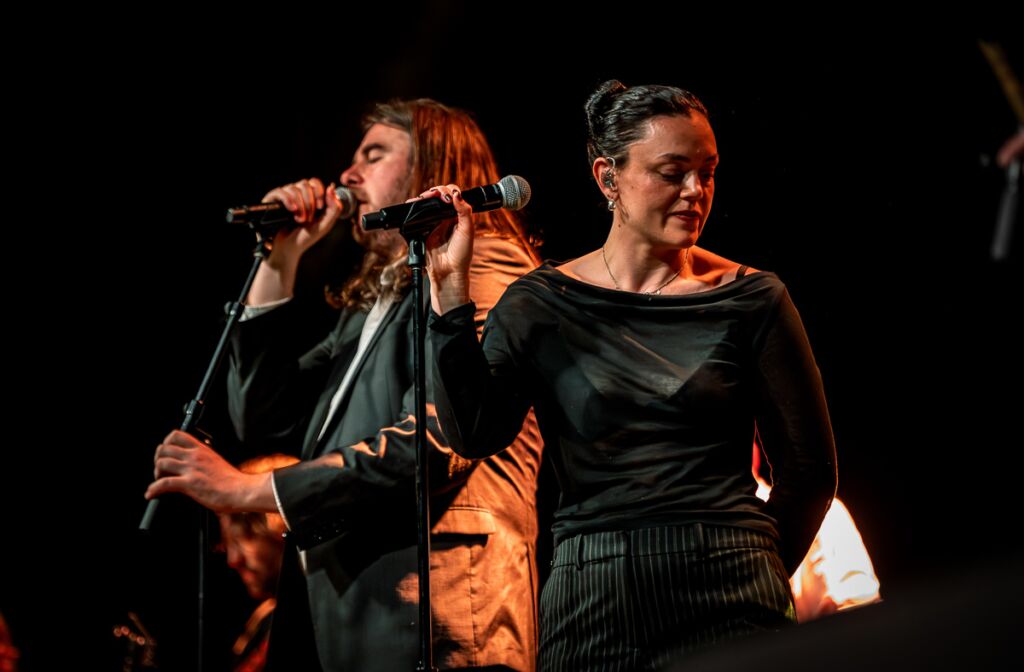
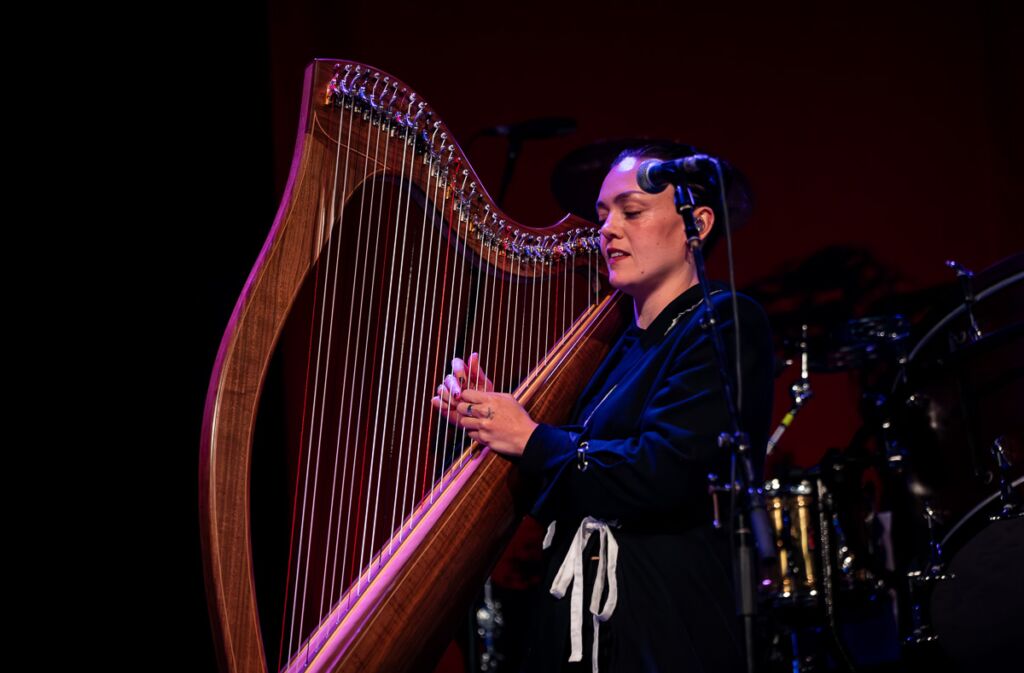
Stacey was The Pogues’ lead vocalist on their final two albums, Waiting For Herb and Pogue Mahone, recorded after Shane MacGowan’s dismissal for drunken erratic behaviour in 1991. However, in Brisbane (and throughout the Australasian tour), lead vocals were shared between him and three other guest singers, Daragh Lynch (from Irish folk band Lankum), singer-songwriter and cláirseach harpist Iona Zajac, and aforementioned opening act John Francis Flynn. In addition, two members of the band took lead vocals on several tracks: autoharpist Lisa O’Neill, and banjo player Jordan O’Leary (former guitarist with metal-folk fusion band The Scratch).
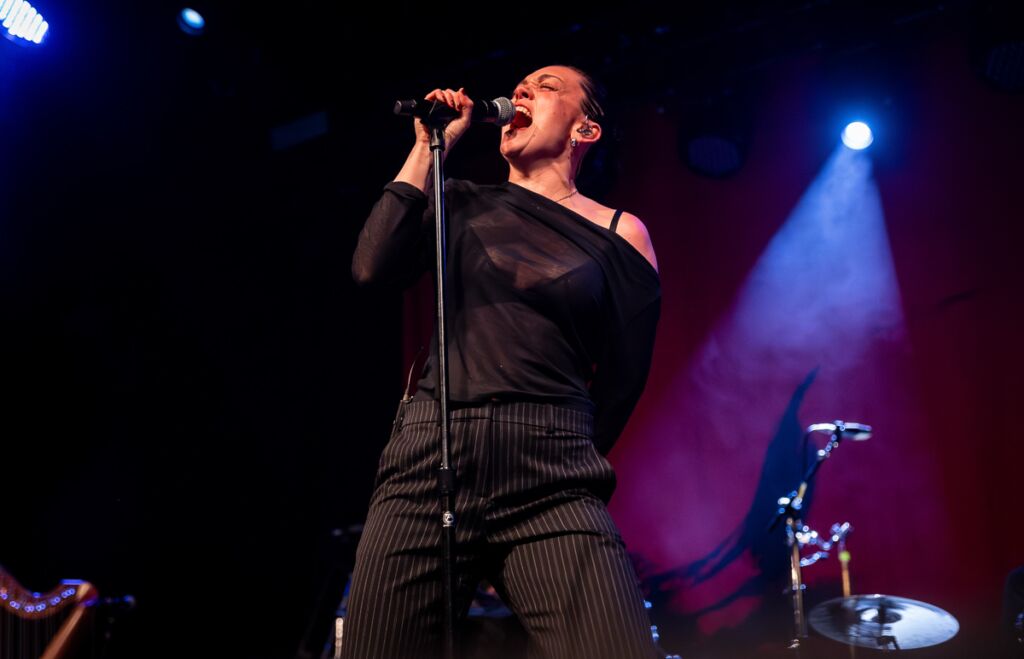
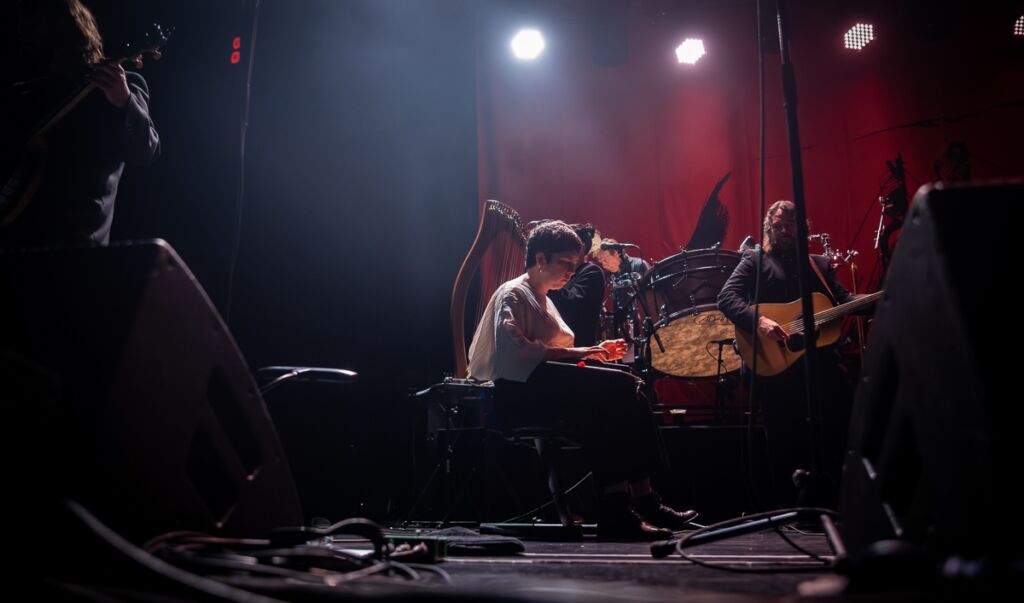
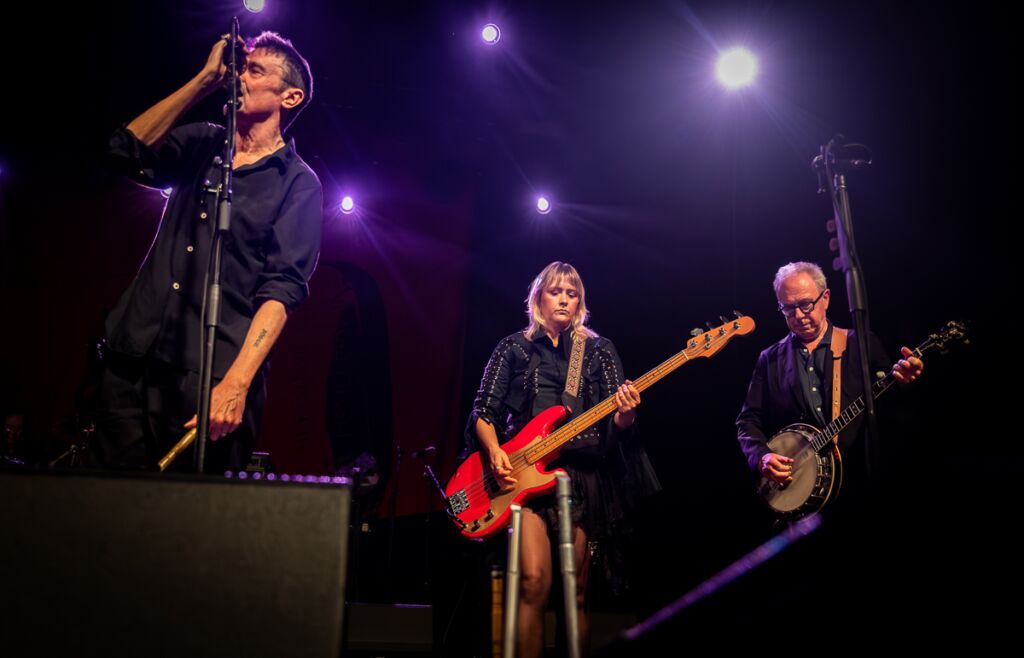
The Pogues – FMH – photos by Bec Harbour
The set also included several instrumentals such as ‘Wild Cats of Kilkenny’, ‘Planxty Noel Hill’ and ‘A Pistol for Paddy Garcia’. For the record, ‘Planxty Noel Hill,’ despite being without lyrics, has often been interpreted as an ironic nod to traditionalist criticism. Noel Hill is an Irish concertina player. In a live studio debate with members of the band on RTÉ Radio during The Pogues’ first tour of Ireland in February 1983, he described their music as a “terrible abortion” that disrespected traditional Irish music. Other purists also criticised The Pogues’ folk-punk blend of up-tempo tunes with acerbic lyrics set to traditional Celtic Irish melodies as ‘cultural appropriation’ (only one of The Pogues’ original members, vocalist Shane MacGowan, was Irish).
Similar arguments persist today, although they often overlook the fact that music is a universal expression that continues to evolve and inspire its creators. Besides, The Pogues are widely credited with popularising traditional Celtic music at a time when it was in decline, and that inspired the formation of other Irish folk bands.
There was a fair amount of humour and camaraderie onstage at Fortitude Hall in Brisbane. Before Scottish harpist Iona Zajac sang ‘The Parting Glass’, Stacey teased her that she’d just recovered from fingernail surgery – presumably she’d snapped a nail on a harp string. She held up a manicured hand and pointed her index finger to confirm the jest. Incidentally, six surviving members of the original Pogues united to play ‘The Parting Glass’ at Shane MacGowan’s funeral in Nenagh, Tipperary, on 8 December 2023, the first time they’d performed together since the reunited band’s second break-up in 2014.
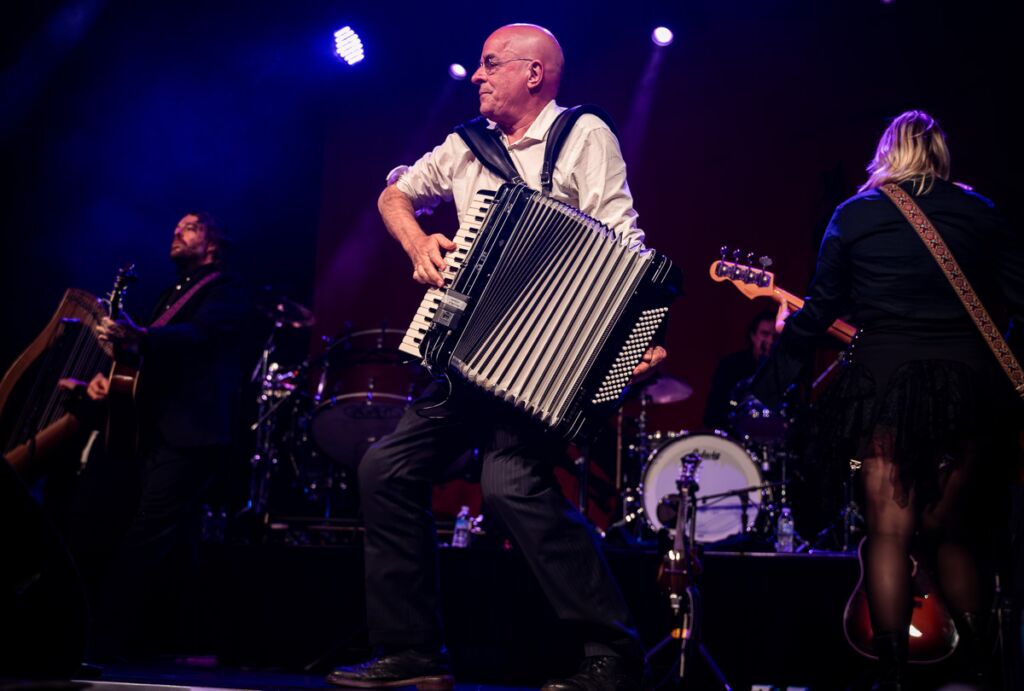
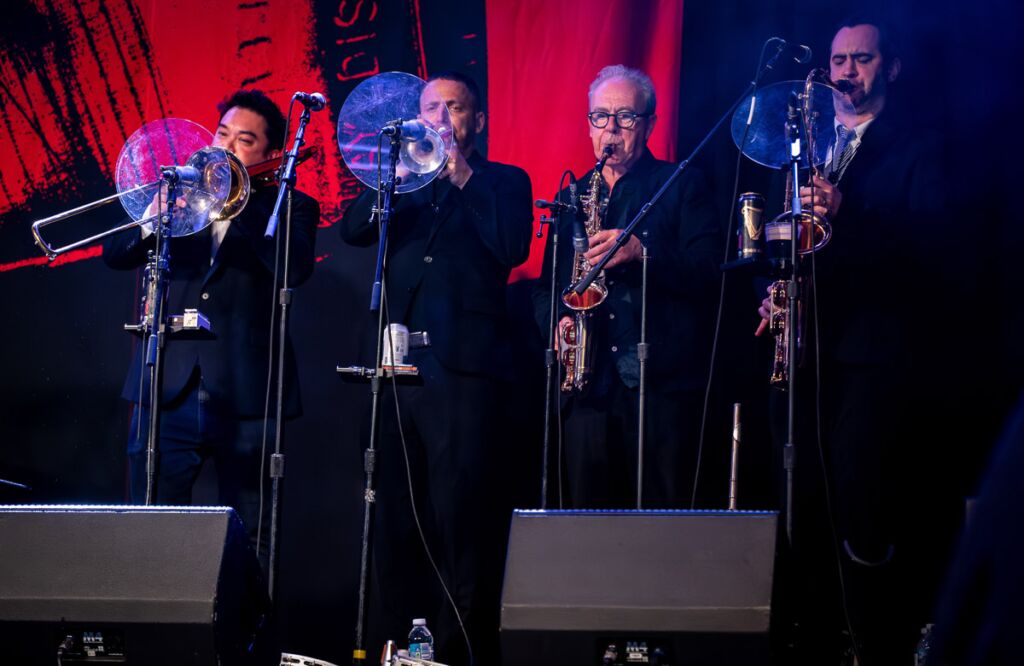
The Pogues – FMH – photos by Bec Harbour
Stacey dedicated the band’s song ‘Rainy Night In Soho’ to the late Shane MacGowan, adding, “without him the world would be monochrome.” Although there was relatively little dancing during The Pogues‘ set – sun-scorched Queenslanders tend to be a static crowd, even when it’s irresistibly foot-tapping up-tempo Celtic folk – there were plenty of crowd singalongs. Particularly rousing were ‘A Pair of Brown Eyes’, ‘Old Main Drag’, the ever-popular Ewan MacColl classic, ‘Dirty Old Town’, and the soldiers’ lament, ‘And the Band Played Waltzing Matilda’, by veteran Scots-Australian composer Eric Bogle.
During the slower verses for ‘Poor Paddy Works on the Railway’, the band all squatted down on the stage while vocalist Iona alone remained standing, then, when the manic chorus kicked in, they all leapt to their feet. The last song of the main set was ‘London Girl’, but the audience wasn’t going to let the band leave on a high, and inevitably they returned to the stage. The Pogues played a multi-song encore, which included their most rousing songs, ‘Streams Of Whiskey’, ‘Dark Streets of London’ and the glorious ‘Irish Rover’, a traditional song they co-recorded and released with The Dubliners.
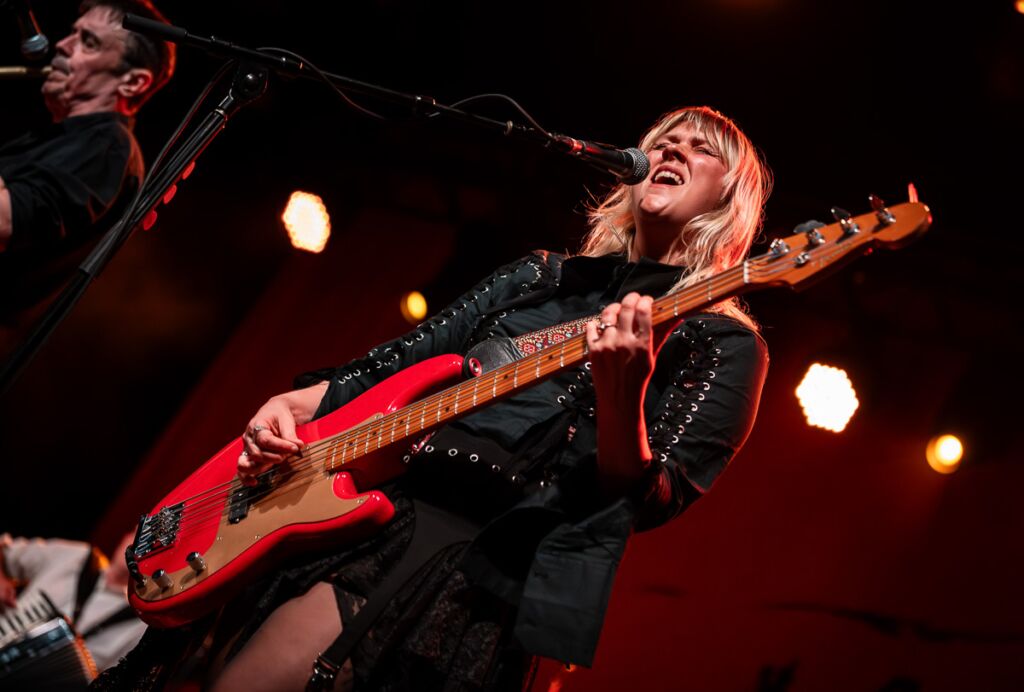
The Pogues – FMH – photos by Bec Harbour
The maritime song, about a fantastical sea voyage that ends in disaster, is attributed to songwriter/arranger Joseph Mary Crofts, who, in 1951 took a mid-19th century sea shanty and added lyrics. He published a seven verse version, which has been whittled back to five or six (The Pogues sing six). The story tells of a magnificent, improbable vessel with 27 masts, carrying ridiculous cargo such as “one million bales of old billie goats’ tails” and “seven million barrels of porter”. The crew of lively characters eventually die of a measles outbreak, leaving the narrator and the captain’s dog, which subsequently drowns when the ship strikes a rock in the fog and disintegrates. It’s an absurd but wonderful tale and The Pogues arguably perform the best version of the song.
The Pogues ended their encore on ‘Sally MacLennane’ with Stacey declaring “this is the last song… probably,” leaving an opportunity for another encore. And of course, the fans begged them to return.
The band returned and finished their concert on another traditional folk song, the sea shanty ‘Greenland Whale Fisheries’, which tells the 1846 story of a whaling ship bound for Greenland. After harpooning a whale, the leviathan capsizes the pursuit dinghy with a flick of its tail and five men are drowned and lost at sea. The lyrics criticise the captain, who is more upset about losing the whale than his sailors.

The Pogues – FMH – photos by Bec Harbour
Interesting to note: The Pogues didn’t play their fast 1 minute 50 seconds instrumental ‘Battle Of Brisbane’ at their Brisbane concert. It’s actually off their first album, Red Roses For Me, not Rum, Sodomy & The Lash, but the band did play several other tracks from that album.
It’s about violent clashes between Australians and American soldiers stationed in Brisbane during World War Two, which resulted in hundreds of injuries and one fatality – an Australian serviceman shot by an American.
Our American allies were seen as brash because their soldiers enjoyed food and luxury items that wartime rationing denied Australians, and were paid significantly more in wages. The latter enabled them to entertain young Australian women in bars and clubs (12,000 Australian women married American soldiers by the end of the war), which undoubtedly sparked jealousy.
That boiled over into the full-scale ‘Battle of Brisbane’ brawling and vandalism on 26 and 27 Nov 1942.
It’s when the quaint expression, “They’re overpaid, oversexed, and over here”, originated and entered the Australian lexicon.
The Pogues Set List
The Sick Bed of Cuchulainn
Wildcats of Kilkenny
A Pair of Brown Eyes
Billy’s Bones
Navigator
Planxty Noel Hill
Gentleman Soldier (Traditional)
Jesse James (Traditional)
I’m a Man You don’t Meet Every Day (Traditional)
Body of an American
The Old Main Drag
The Parting Glass (Traditional)
Dirty Old Town (Ewan MacColl cover)
Rainy Night in Soho
A Pistol for Paddy Garcia
Poor Paddy Works on the Railway (Traditional)
And the Band Played Waltzing Matilda (Eric Bogle cover)
London Girl
Encore 1
Irish Rover (Traditional)
Streams of Whiskey
Boys from the County Hell
Dark Streets of London
Sally MacLennane
Encore 2
Greenland Whale Fisheries (Traditional)